
Outsource Podiatry Billing Services: A Smarter Way to Grow Your Practice

Introduction
If you run a podiatry clinic in the United States, you already know how demanding the day-to-day can get.
You’re seeing patients back to back, managing your staff, keeping up with insurance rule changes and somewhere in the middle of all that, billing is supposed to happen accurately, on time, every single day.
For most practices, that’s where things start to fall apart.
Claim denials pile up. Payments sit unpaid for 60 or 90 days. Your front desk team is stretched too thin trying to handle patient scheduling and billing at the same time. And the revenue that should be coming in? It’s either delayed, reduced, or completely lost.
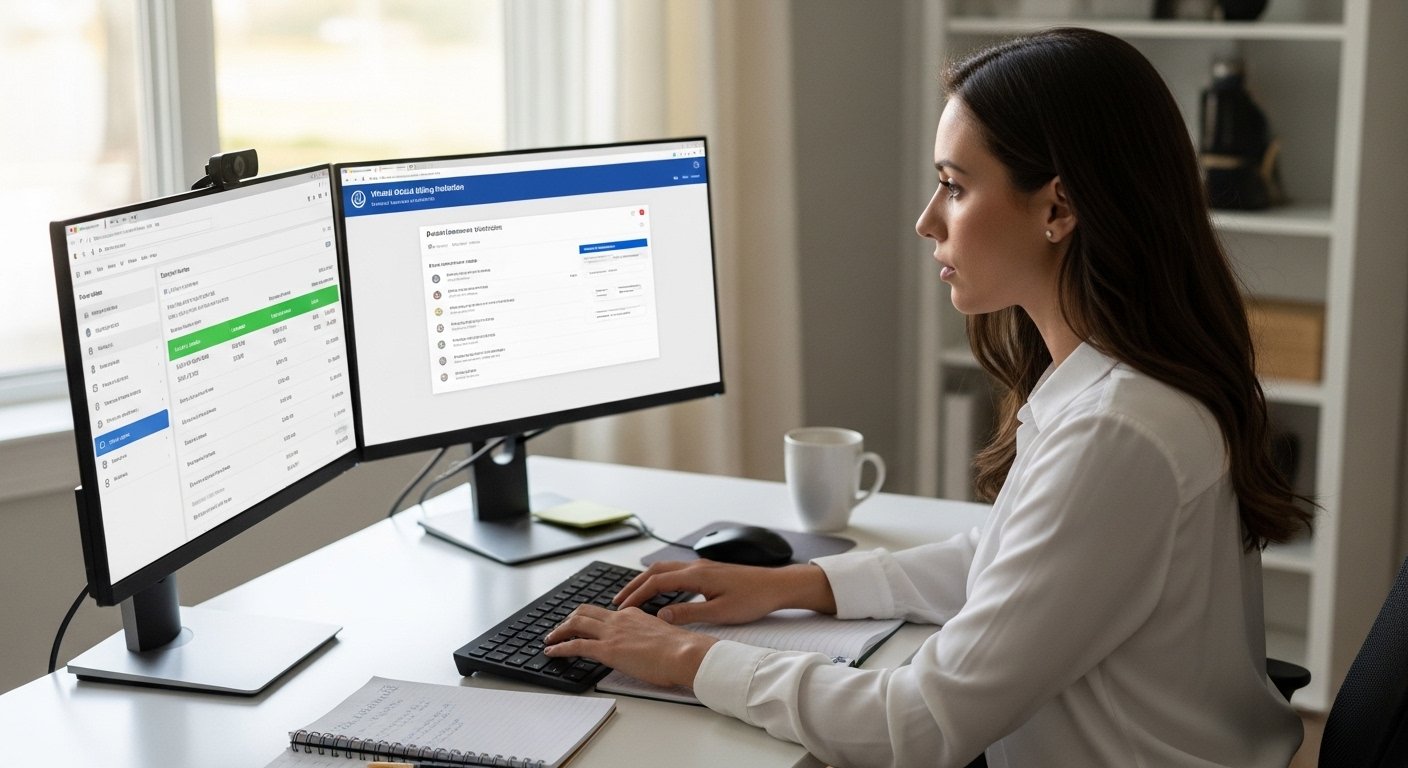
This is exactly why more and more podiatry practices across the US are choosing to outsource their billing to specialists who do this and only this every single day.
Outsourcing podiatry billing isn’t about giving up control of your practice. It’s about putting the right people in the right roles so your clinic can actually run the way it’s supposed to.
In this guide, we’ll walk you through everything you need to know what outsourcing really means, what it costs, what the real benefits are, and how to find a billing partner that actually delivers results.
What Does It Actually Mean to Outsource Podiatry Billing?
Let’s clear this up right away because a lot of practice owners have the wrong idea about what outsourcing billing means.
Outsourcing your podiatry billing does not mean handing over your practice to a stranger and hoping for the best. It means working with a specialized team of certified billing professionals who become an extension of your practice handling the financial side of your operations while you handle the clinical side.
Here’s what an outsourced podiatry billing team actually does for you every single day:
Insurance Eligibility Verification Before a patient even walks through your door, your billing team confirms their insurance coverage, benefits, and any prior authorization requirements. This one step alone prevents the majority of claim rejections.
Accurate Medical Coding CPT, ICD-10, and HCPCS Podiatry has its own specific set of procedure codes nail debridement, bunion corrections, diabetic foot exams, plantar fasciitis treatment, and dozens of others. A specialized coder knows exactly which codes apply, which modifiers are required, and how to document procedures to satisfy Medicare and private payer requirements.
Clean Claim Submission Every claim is reviewed and scrubbed for errors before it’s submitted electronically to the insurance company. The goal is a clean claim on the first attempt because every rejection costs time and money to fix.
Payment Posting When payments come in from insurance companies or patients, they are posted accurately against the correct accounts. This keeps your books clean and gives you an accurate picture of your financial performance at all times.
Denial Management and Appeals When a claim is rejected and some will be, even with the best billing team your outsourced billing partner doesn’t just move on. They investigate why it was denied, fix the underlying issue, and resubmit quickly. For claims that were wrongly denied, they file a formal appeal with the supporting documentation needed to win.
Accounts Receivable Follow-Up Outstanding claims don’t get forgotten. Your billing team tracks every unpaid claim, follows up with insurance companies, and ensures money doesn’t just sit aging in your AR report indefinitely.
Monthly Performance Reporting You receive regular, easy-to-read reports showing your collection rates, denial rates, outstanding AR, and revenue trends. You always know exactly where your money stands no guessing required.
The end result is a complete billing operation running in the background while you focus entirely on treating patients.

Why So Many Podiatry Practices Struggle with In House Billing
Before we talk about the solution, it’s worth understanding exactly why in-house billing is such a common problem for podiatry clinics. Because if you’ve been frustrated with your billing, it’s almost certainly not your team’s fault it’s a structural problem.
Podiatry billing is genuinely specialized
Podiatry is one of the more complex specialties in medical billing. Medicare alone has very specific rules around what qualifies as a covered service for routine foot care and these rules depend on whether the patient has a documented systemic condition like diabetes. Billing for a routine nail trim the wrong way can result in a denial or even an audit.
The Q-modifiers Q7, Q8, and Q9 are used specifically in podiatry to indicate systemic conditions affecting the foot. Most general billing staff have never heard of them, let alone know when to apply them correctly.
Your billing staff has too many jobs
In most small and mid-sized podiatry practices, the person handling billing is also handling front desk duties, scheduling, patient calls, and insurance verifications. Billing requires focused attention and up-to-date knowledge. When it becomes one of five jobs someone is doing, quality drops and denials go up.
Insurance rules change constantly
Medicare, Medicaid, and private payers update their coverage policies, fee schedules, and documentation requirements throughout the year. Keeping up with every payer’s current requirements is practically a full time job on its own. In house staff rarely have the time or resources to stay current.
Denial follow-up gets skipped
Here’s a fact that will frustrate you: studies in the medical billing industry consistently show that up to 65% of denied claims are never appealed or resubmitted. The reason is simple the billing staff is too busy with new claims to go back and fight old ones. That means a significant portion of money your practice earned is just being written off and lost.
Hiring qualified billing staff is expensive and difficult
Finding a certified medical biller with podiatry specific experience is not easy. And when you do find someone, you’re paying a full salary, benefits, training costs, and software costs before they’ve submitted a single claim on your behalf. Then, if they leave, you start the process all over again.

The Real Benefits of Outsourcing Podiatry Billing With Actual Numbers
This is where things get concrete. Let’s talk about what outsourcing actually does for your practice financially and operationally.
Higher First Pass Claim Acceptance Rate
The national average first pass claim acceptance rate for in house billing is around 75% to 85%. That means 15% to 25% of claims are being rejected on the first submission. A professional podiatry billing company should be achieving first pass acceptance rates of 95% or higher. That difference directly translates to faster payments and less money lost to write offs.
Faster Reimbursements
When claims go out clean the first time and follow up is done consistently, your average days in AR drops significantly. Many podiatry practices that outsource billing see their average collection time drop from 45 to 60 days down to 20 to 30 days. That’s cash in your account weeks earlier than before.
Significant Reduction in Denial Rates
The industry average denial rate for podiatry billing is between 10% and 15%. A specialized billing partner should get your denial rate below 5%. On a practice collecting $500,000 per year, moving from a 12% denial rate to a 4% denial rate means recovering an additional $40,000 in revenue annually.
Lower Overall Billing Costs
This surprises most practice owners. When you add up the fully loaded cost of an in house billing employee salary, payroll taxes, health benefits, PTO, billing software subscription, training, and continuing education you’re typically looking at $55,000 to $75,000 per year for a single billing person. Outsourcing typically costs 4% to 8% of collections. For a practice collecting $500,000 annually, that’s $20,000 to $40,000 per year often less than half the cost of a single in house employee, with better results.
Your Doctors See More Patients
When billing is not a daily operational problem, the stress on your clinical team drops. Physicians and staff stop getting pulled into billing disputes and insurance calls. That time goes back to patient care, which is both better for patients and better for revenue.
Full Visibility Without the Work
Contrary to what many practice owners fear, outsourcing gives you more visibility into your billing, not less. Good billing companies provide real-time dashboards and monthly reports so you can see exactly how every dollar is moving through your revenue cycle without having to manage the process yourself.

What Does It Actually Cost to Outsource Podiatry Billing?
Let’s be direct about pricing because there’s a lot of confusion around this.
Most medical billing companies charge a percentage of monthly collections not a flat fee per claim. This model actually aligns their incentives with yours. They get paid more when you get paid more, which means they are motivated to collect every dollar possible on your behalf.
Typical pricing in the industry:
For most podiatry practices, outsourced billing costs between 4% and 9% of monthly collections. Where you fall in that range depends on the size of your practice, the volume of claims you submit monthly, the complexity of your payer mix, and whether you need additional services like credentialing or patient billing support.
What Medfusion charges:
At Medfusion Medical Billing, pricing starts as low as 2.99% of collections with no setup fees and no hidden charges. The first 30 days are completely free giving you a full month to see real results before you commit to anything.
Is it worth it?
Here’s the honest math. If your practice collects $40,000 per month and you’re paying 5% for outsourced billing, that’s $2,000 per month. If your current in house billing has a denial rate of 12% and an outsourced partner can bring that down to 4%, you’re recovering an additional $3,200 per month in previously lost revenue meaning outsourcing is paying for itself and then some, in the first month alone.
The cost isn’t really a cost. It’s an investment with a measurable return.

What Separates a Great Podiatry Billing Company from an Average One
Not every billing company is equipped to handle podiatry, and the difference between a specialized partner and a generic billing service can mean tens of thousands of dollars in annual revenue.
Here’s what you should specifically look for and the questions you should actually ask:
Podiatry Specific Experience
Ask directly: how many active podiatry practices do you currently serve? How long have you been billing for podiatry? A company that primarily bills for internal medicine or psychiatry will not have the deep coding knowledge that podiatry requires. You need someone who already knows the Q-modifiers, the Medicare foot care rules, the diabetic shoe billing requirements, and the common bundling issues that come up in GI and orthopedic overlap procedures.
AAPC Certification
Your billing team should have certified coders specifically CPC (Certified Professional Coder) or CPB (Certified Professional Biller) credentials from the AAPC. These certifications require ongoing education and testing, meaning certified coders stay current with coding changes. Ask for this documentation before signing any contract.
HIPAA Compliance
Your billing partner will have access to your patients’ protected health information. They must be fully HIPAA compliant with encrypted data transmission, secure storage systems, access controls, and a signed Business Associate Agreement (BAA). If a company cannot produce a BAA, walk away immediately.
Transparent Reporting
You should never have to wonder what’s happening with your billing. A good partner gives you access to real time data claim status, denial rates, AR aging, payment trends through a dashboard or regular reports. Monthly meetings or calls to review performance should be standard, not something you have to chase down.
Denial Rate Track Record
Ask any prospective billing company: what is your average first pass claim acceptance rate for podiatry clients? What is your average denial rate? What percentage of denied claims do you successfully appeal? These are concrete, measurable numbers. A good company will be able to answer these questions with confidence. One that gives vague answers probably doesn’t have results worth sharing.
Technology and EHR Integration
Your billing partner should integrate seamlessly with whatever EHR or practice management software you’re already using whether that’s Kareo, DrChrono, eClinicalWorks, SimplePractice, or any other platform. You should not have to change your entire clinical workflow to accommodate your billing company. The billing company adapts to you, not the other way around.
Responsiveness and Communication
This one is underrated but critically important. When you have a billing question or an urgent issue with a claim, you need to be able to reach a real person who knows your account. Ask about their communication policy do you get a dedicated account manager? What’s the average response time? How are urgent issues escalated?
How Outsourced Podiatry Billing Works The Exact Process
Understanding the workflow helps you set realistic expectations and know what to look for in a partner. Here is exactly how the process works when you outsource to a professional billing company:
Step 1 : Onboarding and Practice Setup
The first thing a billing company does is learn your practice inside and out. They gather your provider credentials, fee schedules, payer contracts, EHR login access, and existing claim history. They review your current AR to understand what’s outstanding and build a baseline so you can track improvement over time. A good onboarding process takes one to two weeks and requires minimal effort from your side.
Step 2 : Insurance Eligibility Verification
Before each appointment, your billing team verifies the patient’s insurance coverage, deductible status, co pay requirements, and whether any prior authorization is needed for the planned procedure. This step alone prevents the most common cause of claim denials submitting claims for patients with inactive or incorrect insurance.
Step 3 : Medical Coding
After each patient visit, your clinical notes are reviewed and translated into the correct medical codes. For podiatry, this means selecting the right CPT procedure codes, ICD-10 diagnosis codes, and applying the correct modifiers including podiatry specific modifiers like Q7, Q8, Q9, and bilateral modifier 50 when applicable. Every coded claim is reviewed for accuracy before it moves to submission.
Step 4: Claim Scrubbing and Submission
Before any claim goes to the insurance company, it goes through a scrubbing process an automated and manual review that checks for common errors, missing information, bundling conflicts, and payer specific requirements. Clean claims are submitted electronically, typically within 24 to 48 hours of the patient visit.
Step 5: Payment Posting
When the Explanation of Benefits (EOB) comes back from the insurance company, every payment and adjustment is posted accurately to the correct patient account. Underpayments are flagged immediately for review and follow-up.
Step 6: Denial Management and Appeals
Every denied claim is reviewed to determine the exact reason for denial. The billing team corrects the issue whether it’s a coding error, missing documentation, or an incorrect patient detail and resubmits within the payer’s timely filing deadline. For claims that were wrongfully denied, a formal appeal is filed with the supporting clinical documentation needed to overturn the denial.
Step 7 :AR Follow-Up
Outstanding claims don’t just sit there. Your billing team actively tracks aging accounts receivable, follows up with insurance companies on unpaid claims, and pursues every dollar that your practice has earned. Claims approaching timely filing deadlines are escalated as a priority.
Step 8: Reporting and Review
At the end of each month or more frequently if you prefer you receive a comprehensive performance report. This includes total claims submitted, first pass acceptance rate, denial rate, payments collected, outstanding AR by aging bucket, and month-over-month revenue trends. This data is yours. It tells you exactly how your billing is performing and where opportunities exist to improve further.

How Outsourcing Podiatry Billing Directly Improves Your Revenue
Let’s connect all of this to what actually matters the money coming into your practice.
Fewer Errors, Higher Approval Rates
Every coding error that gets caught before submission is a potential denial prevented. Every prevented denial is a claim that gets paid on the first attempt instead of sitting in a resubmission queue for 30 more days. Over the course of a year, the cumulative effect of a 95% first-pass acceptance rate versus a 78% rate is enormous.
Faster Cash Flow
Clean claims submitted within 24 to 48 hours of the visit, with consistent follow-up, means payments arrive weeks faster than they would with a reactive in-house billing process. For a practice doing $50,000 per month in collections, improving your average days in AR from 55 days to 28 days means you always have significantly more cash available to operate and grow your practice.
Recovered Revenue from Old Denials
When a professional billing team takes over an existing practice, one of the first things they do is go through the aged AR and identify denied or abandoned claims that can still be recovered. It’s common for practices to discover $20,000 to $50,000 in recoverable revenue sitting in their AR that in-house staff had simply moved on from.
Reduced Write Offs
Write offs are the silent killer of podiatry practice revenue. Every claim that gets written off as uncollectable is money your practice earned but never received. A billing company with strong denial management and AR follow up dramatically reduces your write off rate recovering dollars that previously just disappeared.
Scalable Revenue as You Grow
When your practice adds a provider, opens a second location, or increases patient volume, your billing capacity scales automatically with your outsourced team. There’s no need to hire additional billing staff, buy more software licenses, or create new workflows. The billing company handles the increased volume as part of your existing arrangement.
Frequently Asked Questions About Outsourcing Podiatry Billing

Will I lose control over my billing if I outsource it?
No and this is the most common concern practice owners have. When you outsource to a professional billing company, you gain more visibility, not less. You receive regular reports, have access to real time dashboards, and have a dedicated account manager you can reach directly. You make the decisions about your practice the billing company just executes the financial operations with expertise.
How quickly will I see results after outsourcing?
Most podiatry practices start seeing measurable improvements within the first 30 to 60 days. Clean claim rates typically improve immediately because errors are caught before submission. Cash flow improvements follow shortly after as faster claim cycles begin to take effect. Full AR optimization, including recovery of older denied claims, typically takes 60 to 90 days to show the full impact.
Is my patient data safe with an outsourced billing company?
Yes, provided you choose a HIPAA compliant company and execute a signed Business Associate Agreement before any data is shared. A reputable billing company will have encrypted data systems, strict access controls, and regular security audits. Always ask for proof of HIPAA compliance and request a BAA before signing any contract.
What if I’m not happy with the results?
This is why choosing a billing company that offers a free trial period is so important. At Medfusion, we offer the first 30 days completely free. If you’re not satisfied with the results, you haven’t paid anything. Beyond the trial period, most contracts have reasonable notice periods typically 30 to 60 days before you can transition to a different provider.
Do I need to change my EHR or practice management software?
No. A good billing company works with your existing systems not the other way around. Before signing any agreement, confirm that the billing company supports your specific EHR platform and has experience integrating with it.
What’s the difference between outsourcing billing and using billing software?
Billing software is a tool it helps you manage claims but still requires your staff to do the actual billing work. Outsourcing means a team of specialists is doing the work for you, using their own tools and expertise. Software alone doesn’t reduce denials, follow up on appeals, or recover aged AR. A billing team does all of that.
How does pricing work do I pay even if claims are denied?
Most billing companies, including Medfusion, charge a percentage of collections meaning you only pay on money that is actually collected. If a claim is denied and not recovered, you don’t pay a fee on it. This structure ensures your billing company is always motivated to collect every dollar possible.
Conclusion
Running a podiatry clinic takes everything you’ve got.
The last thing you should be spending your energy on is chasing down denied claims, figuring out why Medicare rejected a nail debridement claim, or trying to keep up with changing payer policies on top of everything else.
Outsourcing your podiatry billing to a specialized team is one of the highest return decisions a clinic owner can make. It reduces costs, speeds up cash flow, recovers lost revenue, and removes one of the biggest operational headaches from your plate so you can put your full attention back on your patients and your practice.
The question isn’t really whether you can afford to outsource your billing. It’s whether you can afford not to.